12 lead ECG
Your heart rhythm and electrical activity at rest, in about 10 minutes
Often used for palpitations, chest pain, dizziness, checks before treatment

Heart palpitations are a heartbeat you suddenly notice: racing, pounding, fluttering or skipping beats. They are usually harmless, but if they keep coming back, our cardiologist at KONCEPT® in Kingston, Dr Ameer Al-Bassam, can find the cause with an ECG and, if needed, a Holter monitor that records your heart through normal days. No GP referral is needed if you pay for yourself.
Drawn from British Heart Foundation figures, NICE clinical guidelines and peer-reviewed research. Every figure links to its citation in the References section at the bottom of this page.
What causes palpitationsHeart palpitations are when your heartbeat suddenly becomes more noticeable. Your heartbeat may feel:
They can last a few seconds or much longer, and can happen at rest or during activity.
Palpitations are often caused by everyday triggers rather than a heart problem. Common causes include:
Sometimes they are caused by a heart rhythm problem, such as atrial fibrillation, or by another condition such as an overactive thyroid or anaemia. That is why palpitations that keep coming back are worth checking.
If you had these symptoms but they have now stopped, ask your GP surgery for an urgent appointment or call NHS 111.
If you feel well otherwise, see a doctor or book with our cardiologist if your palpitations keep coming back or are happening more often, last longer than a few minutes, or you have a heart condition or a family history of heart problems.
At KONCEPT® in Kingston, the first test for heart palpitations is a 12 lead ECG, which records your heart’s electrical activity in about 10 minutes and shows a rhythm problem if it happens during the recording.
Blood tests such as a thyroid test or a full blood test can also be booked here, as an overactive thyroid or anaemia can cause palpitations.
Because palpitations often come and go, the cardiologist may ask you to wear a Holter monitor for 24 hours to 14 days, which records every heartbeat through your normal days and nights. Blood tests can check for causes such as an overactive thyroid or anaemia, and an echocardiogram may be done if a heart condition is suspected.
Your heart rhythm and electrical activity at rest, in about 10 minutes
Often used for palpitations, chest pain, dizziness, checks before treatment
Every heartbeat through your normal days and nights
Often used for palpitations, dizzy spells or blackouts that come and go
Your blood pressure through a normal day and night
Often used for confirming or ruling out high blood pressure, checking treatment
The structure, pumping and valves of your heart
Often used for breathlessness, a heart murmur, swollen ankles, an abnormal ECG
A specialist assessment that decides which tests you need
Often used for any heart symptom or concern
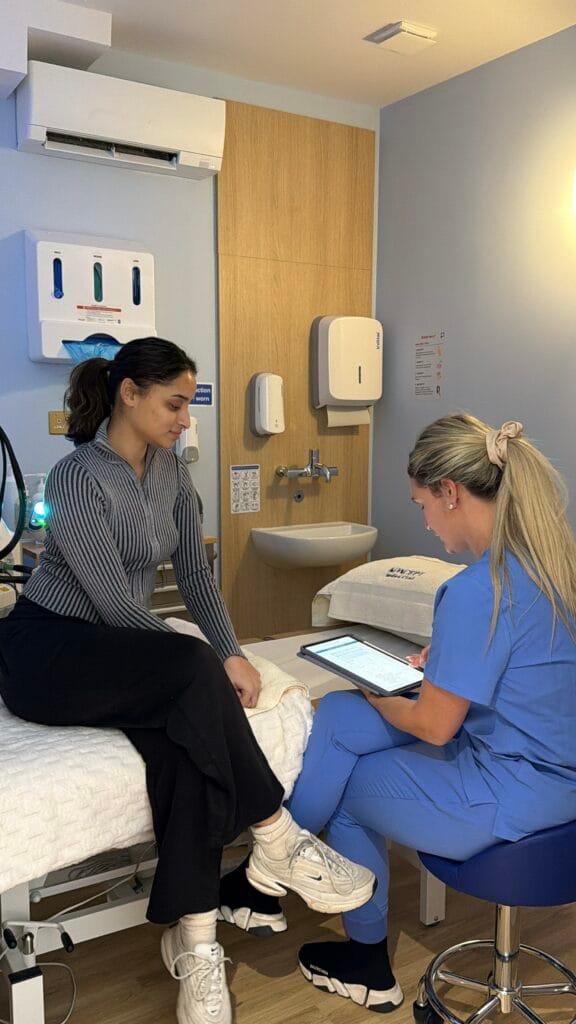
Most palpitations do not need treatment. Cutting down on caffeine and alcohol, stopping smoking, sleeping well and managing stress often help.
If a heart rhythm problem is found, the cardiologist explains the treatment options with you. These may include medicines, or a referral for a procedure at a hospital of your choice.
A heart palpitations assessment at KONCEPT® in Kingston starts with a £200 consultation with the cardiologist. An ECG costs £119 and a 24 hour Holter monitor £295, each with a report. You only pay for the tests you have, and your total is confirmed in writing first.
A £50 reservation fee is paid when you book and is taken off your final bill, so the price you see is the total you pay. It is refunded in full if you cancel 24 hours or more before your appointment.
Many private medical insurance policies cover a heart palpitations assessment when it is needed to investigate symptoms, if your policy includes outpatient cover. For your insurer to pay, the clinic and the cardiologist usually both need to be recognised by that insurer, and most insurers ask for a GP or open referral and a pre authorisation number first.
Please call 020 8129 1011 with your insurer and policy number before you book, so we can confirm your cover in writing. If you pay for yourself, no GP referral is needed.
You see Dr Ameer Al-Bassam, a specialist and interventional cardiologist on the GMC Specialist Register for cardiology, who also works in the NHS at Chelsea and Westminster Hospital NHS Foundation Trust.

Dr Ameer Al-Bassam
Specialist and interventional cardiologist · Chelsea and Westminster NHS. Clinic dates: call 020 8129 1011.
Read full bio →Usually not. Most palpitations are harmless and caused by things like stress, caffeine or lack of sleep. They are worth checking if they keep coming back or last longer than a few minutes, and you need urgent help if they come with chest pain, shortness of breath or fainting.
Ectopic beats are extra or skipped heartbeats. They can feel like a flutter or a thump and are common. An ECG or a Holter monitor can show whether that is what you are feeling.
Yes. Stress and anxiety are common causes of palpitations. A heart rhythm problem can also feel like anxiety, so palpitations that keep coming back are worth checking.
A Holter monitor records your heart for 24 hours to 14 days, so it can catch palpitations that come and go. You note the time in a diary when you feel them.
No, not if you are paying for yourself. If you are using health insurance, your insurer will usually ask for a referral and a pre authorisation number first.
Yes. KONCEPT® is at 46 to 48 Wood Street in central Kingston, opposite Kingston station, a short trip from Wimbledon, Surbiton, New Malden and Richmond.
KONCEPT® Medical Clinic is registered with the Care Quality Commission (CQC). Medical Director Dr Maryam Attarzadeh (GMC 7193218). Page medically reviewed by Dr Maryam Attarzadeh and cardiologist Dr Ameer Al-Bassam (GMC 7471608), 7 November 2026.
46 to 48 Wood Street, Kingston upon Thames, KT1 1UW · 020 8129 1011 · info@konceptmedicalclinic.com
Statistics and clinical information on this page are drawn from British Heart Foundation figures, NHS health information, NICE clinical guidelines and peer-reviewed research. Each source is linked for verification.
Evaluation and outcomes of patients with palpitations.
American Journal of Medicine 1996, 100(2), 138-148
pubmed.ncbi.nlm.nih.gov/8629647Number of UK people with heart rhythm condition rises by 50% in a decade.
BHF news, 19 May 2023
bhf.org.uk/what-we-do/news-from-the-bhf/news-archive/2023/may/new-figures-show-the-number-of-uk-people-with-heart-rhythm-conditionMeta-analysis: antithrombotic therapy to prevent stroke in patients who have nonvalvular atrial fibrillation.
Annals of Internal Medicine 2007, 146(12), 857-867
pubmed.ncbi.nlm.nih.gov/17577005Atrial fibrillation: diagnosis and management (NG196).
NICE, April 2021, updated June 2021
nice.org.uk/guidance/ng196Heart palpitations.
NHS website, page last reviewed 17 March 2026
nhs.uk/symptoms/heart-palpitationsPalpitations.
NICE CKS, last revised February 2026
cks.nice.org.uk/topics/palpitationsStatistics and references reviewed by: Dr Maryam Attarzadeh, Founder and Medical Director (GMC 7193218), 8 November 2026. Next review due: 8 May 2027. Statistical claims are re-verified every 6 months, or sooner if peer-reviewed evidence changes.