Varicose veins, spider veins and thread veins.
National Health Service
nhs.uk/conditions/varicose-veins
Service
Consultant-led
Gold-standard
Microsclerotherapy
Typical course
2 to 6 sessions
Session pricing
See pricing page
Drawn from NHS, NICE QS67, the European Society for Vascular Surgery, the European sclerotherapy guidelines (Rabe et al. 2014), the Goldman / Weiss sclerotherapy textbook and Cochrane. Every figure links to its citation in the References section at the bottom of this page.
How common thread veins areUp to 50%
of UK adults over 40 have thread or spider veins, more common in women
Gold standard
microsclerotherapy is the most widely supported treatment for leg thread veins
60-80%
typical improvement in the appearance of treated thread veins per session, results vary
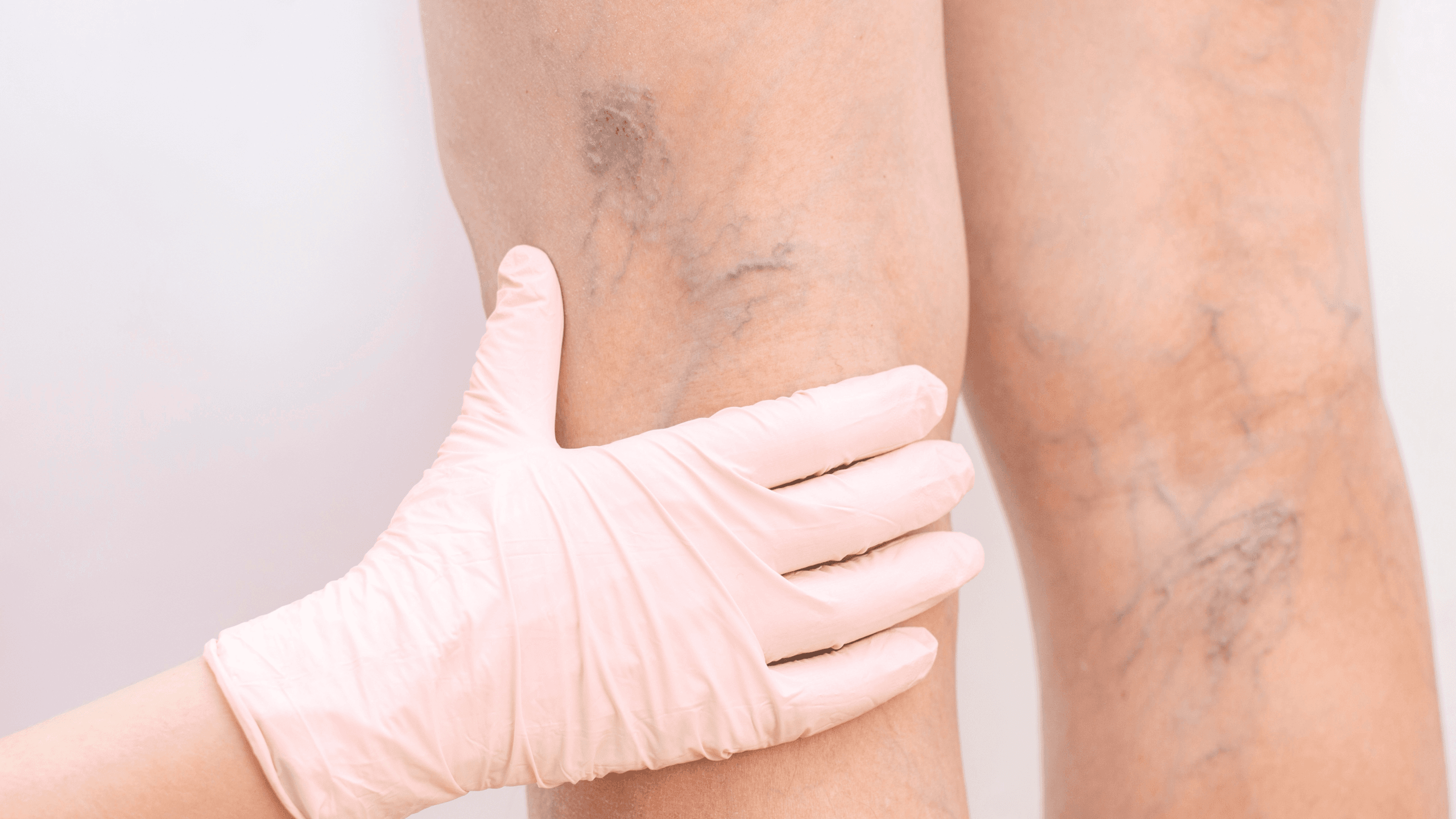
Thread veins, spider veins and telangiectasia are different names for the same thing, the small (typically less than 1 mm) red, blue or purple vessels that sit just under the surface of the skin[1][3][4]. They most commonly appear on the legs, particularly the thighs and around the ankle, where they can form fan-shaped or web-shaped patterns. They are not the same as varicose veins, which are larger, raised, rope-like veins.
Slightly larger feeder vessels (typically 1 to 3 mm, called reticular veins) often sit beneath them and feed them, and treatment of these feeders is part of getting a good result.
The exact mechanism is not fully understood, but recognised contributing factors include[1][3][4]:
Treatment is usually for cosmetic reasons, although some patients experience local aching, itching, burning or a tender lump in the area of the thread veins. We see patients in three broad situations:
Getting the right result depends on starting with the right assessment[3][4]:
Where the assessment confirms isolated thread veins with no underlying reflux, microsclerotherapy can be started at the same visit or at a follow-up appointment. Where duplex shows underlying varicose-vein reflux, that is usually treated first, because thread-vein treatment without treating the reflux gives poorer and shorter-lasting results[3][4].
Initial consultation pricing is on the pricing page.
Treatment optionsA very fine needle is used to inject a small volume of liquid sclerosant directly into the thread vein. The sclerosant irritates the vein lining, the vein closes, and over the following weeks the body absorbs it[4][6][7].
Where slightly larger feeder reticular veins are present, foam sclerotherapy may be used to treat them in the same session or beforehand. Foam allows a smaller volume of sclerosant to treat a larger vein effectively. Foam sclerotherapy is described in detail on the Varicose vein treatment page.
For very fine vessels that resist sclerotherapy, particularly close to the surface or on the face, laser or IPL may be considered. KONCEPT® runs a separate facial thread veins service, see Facial thread vein treatment. For leg thread veins, microsclerotherapy remains first-line per ESVS and the international sclerotherapy guidelines[4][6].
We want you to make an informed choice. Here is what the published evidence and our own practice tell patients to expect.
If you are unsure whether treatment is right for you, the consultation appointment is for talking it through. You are not committed to a session at the consultation.
First visitFor full pre-care and post-care instructions, see our Patient instructions page.
Pricing for microsclerotherapy sessions is on the pricing page. Pricing is per session, typically with a written quote for an expected course based on the consultation assessment. Compression garments are charged separately.
You receive a written quote before any treatment is booked.
Thread-vein treatment is usually classed as cosmetic by insurers and is not typically covered. Where there is a clinical indication (symptomatic thread veins, underlying varicose-vein reflux confirmed on duplex), insurers will often cover the assessment and treatment of the underlying cause. Cover for the surface treatment itself varies. Call 020 8129 1011 with your policy details and we will check with your insurer before any appointment is booked.
Call 020 8129 1011 with your insurer and policy details and we will come back to you within one working day with confirmation, before any appointment is booked.
Read more on the Insurance & access page →
Your consultants and teamThread-vein consultations at KONCEPT® are carried out by one of our Consultant Vascular Surgeons, both on the GMC Specialist Register for Vascular Surgery and both BUPA-recognised, fee-assured consultants. They hold substantive NHS consultant posts at St George’s University Hospitals NHS Foundation Trust and see private patients here on a practice-privileges basis.
Microsclerotherapy is performed by your consultant. Compression-garment fitting is delivered by our compression specialist.
FAQsThread veins (also called spider veins or telangiectasia) are the small red, blue or purple vessels that sit just under the skin, most commonly on the legs. They are usually less than 1 mm wide and are not the same as varicose veins.
They are different names for the same thing. “Thread veins” is the most common UK patient term, “spider veins” is the US equivalent (and also widely used in the UK), and “telangiectasia” is the medical term used by clinicians and in published literature.
The exact mechanism is not fully understood, but recognised contributing factors include age, female sex, hormonal influence (pregnancy, oestrogen-containing medications), genetic predisposition, prolonged standing, higher body mass index and, in some patients, underlying varicose-vein reflux.
The gold-standard treatment for leg thread veins is microsclerotherapy, where a very fine needle is used to inject a small volume of sclerosant directly into the thread vein. Where larger feeder reticular veins are present, foam sclerotherapy may be used as well. For very fine surface vessels that resist sclerotherapy, laser or IPL may be considered (most commonly on the face).
Typically 2 to 6 sessions, spaced 4 to 8 weeks apart. The exact number depends on how many thread veins there are, their distribution and how they respond. Your consultant will agree the expected course at your first consultation.
The needles are very fine, so most patients describe a mild stinging sensation as the sclerosant is injected. No local anaesthetic is needed. Some patients experience aching in the treated area for a day or two afterwards.
The treated thread veins do not usually re-open. However, new thread veins can appear over time because the underlying tendency continues. Top-up sessions every few years are common.
Yes. Medical-grade compression is usually worn for several days to weeks after each session, depending on the area treated. Compression supports the result and reduces side effects.
The most common side effects are temporary brown staining along the treated vein (usually fades over weeks to months), localised swelling, and very fine new vessels in the treated area (telangiectatic matting). Rarer side effects include skin pigmentation, a small skin ulcer or allergic reaction to the sclerosant. Your consultant will discuss the specific risks with you.
Treatment is not a one-off fix. The goal is a meaningful improvement that lasts, with top-up sessions every few years to maintain the result. New thread veins can develop over time because the underlying tendency continues.
Not every patient does. We arrange duplex ultrasound where there are also larger varicose veins, ankle swelling, skin changes, or a history suggesting underlying reflux. The aim is to confirm that thread veins are isolated, rather than the surface sign of a deeper varicose-vein problem that needs treating first.
Thread-vein treatment is usually classed as cosmetic and is not typically covered. Where there is a clinical indication (symptomatic thread veins or underlying varicose-vein reflux confirmed on duplex), some insurers will cover assessment and treatment of the underlying cause. Cover for the cosmetic surface treatment itself varies. Call 020 8129 1011 with your insurer and policy details before booking.
For self-pay, no, you can book directly. Most insurers also allow direct booking. A small number still require a GP referral letter, we will confirm what your insurer needs when you enquire.
The first consultation is 30 to 45 minutes. If a microsclerotherapy session is included on the day, allow up to 90 minutes. Subsequent treatment-only sessions are typically 30 to 45 minutes.
No. Facial thread veins are usually treated with laser or IPL rather than sclerotherapy because the facial skin and underlying anatomy are different. Facial vessels are assessed and treated collaboratively across our dermatology, laser and vascular teams, with the right approach chosen at consultation. See Facial thread vein treatment for the dedicated service.
Surrey catchment also includes Esher, Cobham, Weybridge, Walton-on-Thames, Oxshott and Hampton.
To book a thread-vein consultation with one of our Consultant Vascular Surgeons, or to discuss your case, get in touch.
Email info@konceptmedicalclinic.com · Visit 46-48 Wood Street, Kingston upon Thames, KT1 1UW · See full self-pay pricing →
Regulation and standards
KONCEPT® Medical Clinic is registered with the Care Quality Commission (CQC) for the regulated activities provided at our Kingston upon Thames premises. All consultants are on the General Medical Council (GMC) Specialist Register for Vascular Surgery and remain personally accountable to the GMC under Good Medical Practice.
Claims about prevalence, treatment options and outcomes on this page are drawn from NHS, NICE QS67, the European Society for Vascular Surgery, the European sclerotherapy guidelines (Rabe et al. 2014), the Goldman / Weiss sclerotherapy textbook and Cochrane. Each source is linked for verification.
Varicose veins, spider veins and thread veins.
National Health Service
nhs.uk/conditions/varicose-veinsThread veins (telangiectasia).
BUPA
bupa.co.uk/…/thread-veinsQuality Standard QS67, Varicose veins.
NICE, August 2014, last updated 2019
nice.org.uk/guidance/qs67Management of Chronic Venous Disease, Clinical Practice Guidelines of the European Society for Vascular Surgery (ESVS).
European Journal of Vascular and Endovascular Surgery 2015, 49(6), 678-737
doi.org/10.1016/j.ejvs.2015.02.007Varicose veins, diagnosis and management (CG168).
NICE, July 2013
nice.org.uk/guidance/cg168European guidelines for sclerotherapy in chronic venous disorders.
Phlebology 2014, 29(6), 338-354
pubmed.ncbi.nlm.nih.gov/23559590Sclerotherapy, treatment of varicose and telangiectatic leg veins. 6th ed.
Elsevier, 2017
elsevier.com/…/sclerotherapyInjection sclerotherapy for varicose veins.
Cochrane Database of Systematic Reviews 2006, (4), CD001732
doi.org/10.1002/14651858.CD001732.pub2Consent, Supported Decision-Making, A Guide to Good Practice.
RCS England, 2018
rcseng.ac.uk/…/consentLast clinical review: Dr Maryam Attarzadeh, Medical Director (GMC 7193218), 2026-05-28. Next review due: 2026-11-28. Statistical claims are re-verified every 6 months, or sooner if peer-reviewed evidence changes.