Compression stockings.
National Health Service
nhs.uk/conditions/compression-stockings
Prescription
Consultant-led
Fitting
Compression specialist
UK classes fitted
Class 1, 2 & 3
Replacement
3 to 6 months
Drawn from NHS, NICE quality standards, ESVS, British Lymphology Society, International Lymphoedema Framework, Cochrane reviews and the British National Formulary. Every figure links to its citation in the References section at the bottom of this page.
What compression deliversMulti-layer
compression bandaging is the cornerstone of healing for venous leg ulcers
Required
after EVLA / RFA / foam sclerotherapy procedures per NICE & ESVS practice
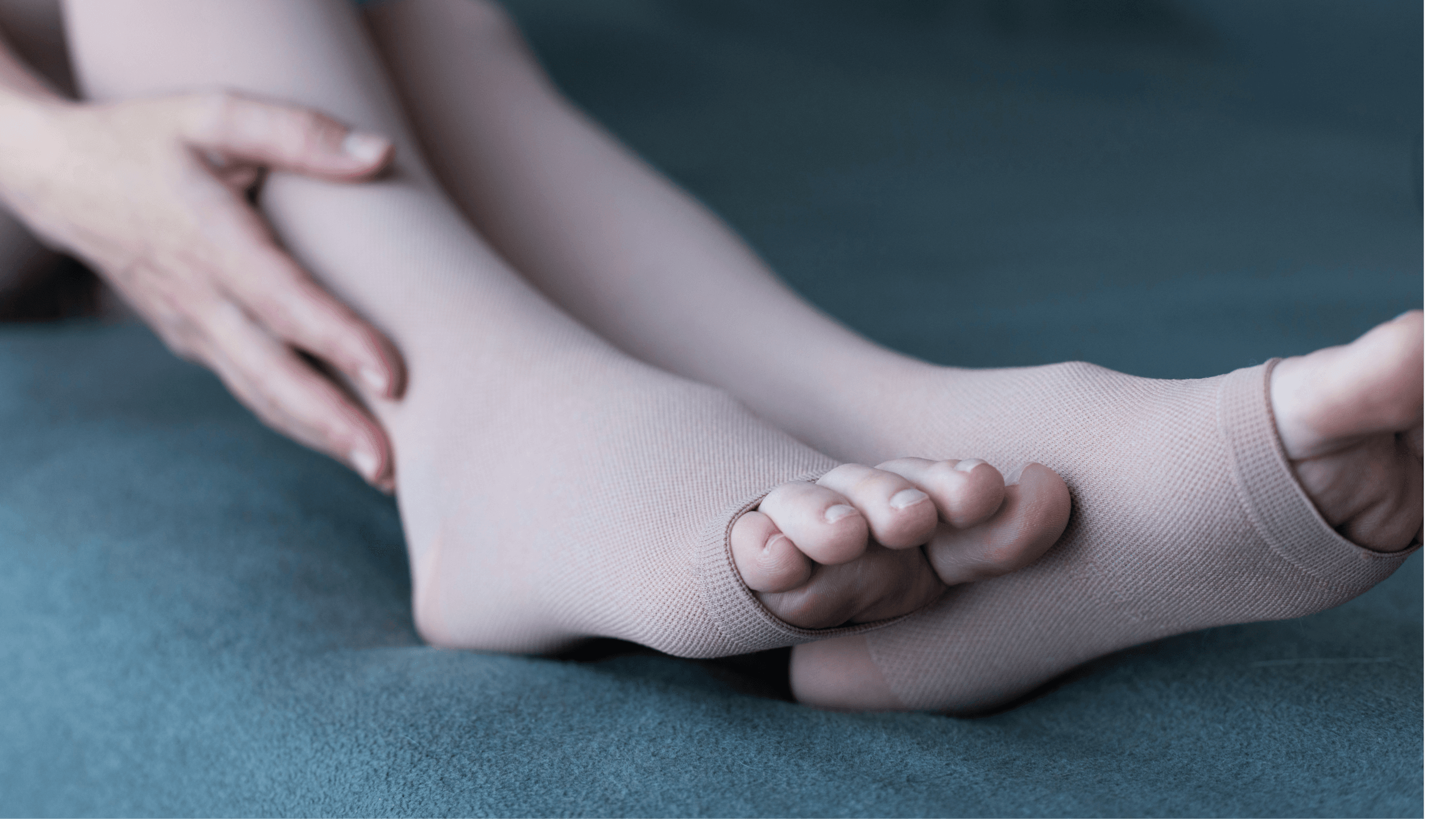
Medical-grade compression garments apply graduated pressure to the leg or arm, with the highest pressure at the ankle (or wrist) decreasing up the limb. This:
The UK British Standard recognises three classes of medical compression stockings, each with a specified ankle pressure range. Your consultant prescribes the class based on your underlying condition and your ABPI result[9].
Mild varicose veins, aching legs, prevention, pregnancy support, light occupational use.
Moderate varicose veins, after vein closure (EVLA / RFA / foam), mild lymphoedema, post-DVT prophylaxis. The most commonly prescribed class.
Severe venous insufficiency, moderate-to-severe lymphoedema, established post-thrombotic syndrome.
We see patients in the following categories:
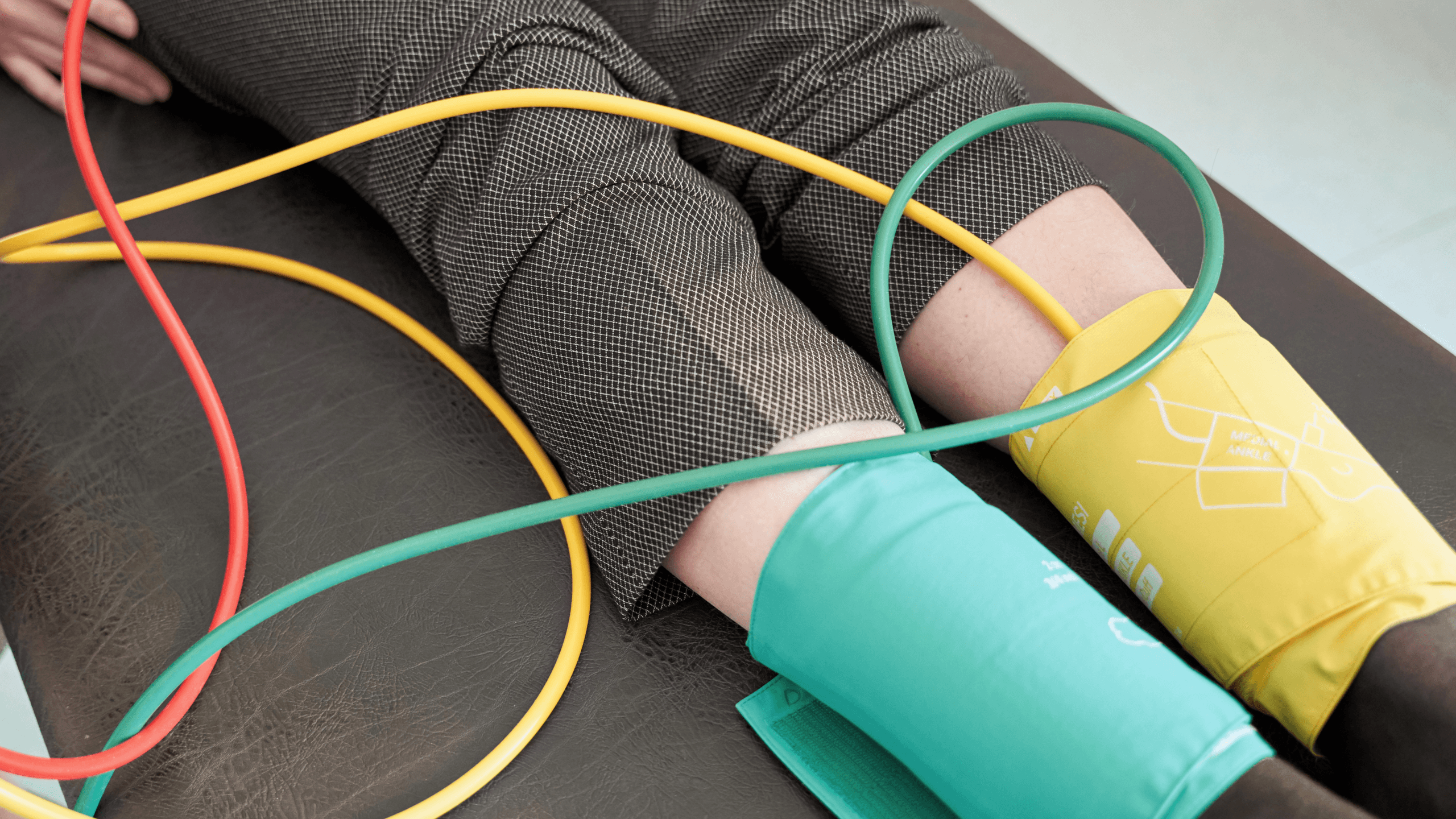
Every patient at KONCEPT® has an Ankle-Brachial Pressure Index (ABPI) before compression therapy is started. ABPI is a simple, non-invasive test that compares the blood pressure at the ankle with the blood pressure at the arm. It is performed at your consultation by the consultant or by the compression specialist under consultant oversight.
For patients with diabetes, the diabetic foot pathway runs alongside this. See Diabetic foot service.
Fitting pathwayMade on a circular machine, smooth on both surfaces, used for most venous indications. Most off-the-shelf compression stockings are round-knit.
Made on a flat machine and stitched along a seam, more rigid, less likely to cut into a limb that has changed shape. The standard choice for established lymphoedema and lipo-lymphoedema, and where the limb is no longer cylindrical[6][7].
Where standard sizing does not fit the patient’s limb shape, a made-to-measure garment is ordered. Common indications include marked shape change (lymphoedema), unusually long or short limbs, and post-procedure shape change. Lead time is typically 2 to 3 weeks.
Compression therapy works only if the garment is worn. Practical advice we give every patient:
For full pre-care and post-care instructions, see our Patient instructions page. Compression sits alongside the lymphoedema and wound-care pathways in that guide.
PricingPricing for compression-fitting appointments, off-the-shelf garments and made-to-measure garments is on the pricing page. Garments are charged separately from the fitting appointment, and the cost depends on length (knee-high, thigh-high, sleeve), material (round-knit or flat-knit) and whether the garment is off-the-shelf or made-to-measure.
You receive a written quote before any garment is ordered.
Full pricing for every treatment →
See patient pre-care & post-care instructions →
InsuranceCompression therapy is recognised by most major UK private medical insurers when there is a clinical indication, particularly where compression is part of the treatment of varicose veins, lymphoedema, leg ulcer or post-thrombotic syndrome. Cover for ongoing replacement varies by policy.
Recognition at KONCEPT® is at both clinic and consultant level, and cover is expanding. Call 020 8129 1011 with your insurer and policy details and we will come back to you within one working day with confirmation, before any appointment is booked.
Read more on the Insurance & access page →
Your consultants and teamCompression prescriptions at KONCEPT® are approved and overseen by one of our Consultant Vascular Surgeons, both on the GMC Specialist Register for Vascular Surgery and both BUPA-recognised, fee-assured consultants. They hold substantive NHS consultant posts at St George’s University Hospitals NHS Foundation Trust and see private patients here on a practice-privileges basis.
Day-to-day measuring, fitting, demonstration, replacement and follow-up of compression garments is delivered by our compression specialist, working under consultant supervision.
FAQsCompression therapy uses medical-grade graduated-pressure garments (stockings, tights or sleeves) to improve venous return, reduce swelling, support the skin and reduce ulcer recurrence. It is the cornerstone of treatment for venous and lymphatic conditions of the leg and arm.
In the UK, “compression stockings” is the term used for medical-grade graduated-pressure hosiery prescribed and fitted to British Standard classes (Class 1, 2 or 3). “Compression socks” is a looser retail term that can include lower-pressure travel or sports socks not classified to medical standards. At KONCEPT® we fit medical-grade compression to UK class standards.
The UK British Standard recognises three classes for medical compression stockings: Class 1 (14 to 17 mmHg, mild support), Class 2 (18 to 24 mmHg, moderate support, most common after vein procedures), and Class 3 (25 to 35 mmHg, strong support, used in severe venous insufficiency, lymphoedema and post-thrombotic syndrome). Your consultant prescribes the class based on your condition and your ABPI result.
It depends on your condition. After EVLA / RFA / foam sclerotherapy, compression is typically worn during the day for 2 to 4 weeks, depending on procedure. For chronic venous insufficiency, lymphoedema or post-thrombotic syndrome, compression is usually lifelong daytime wear. Your consultant will agree the plan with you.
For most indications, no. Compression is taken off at night and re-applied in the morning before the leg has time to swell. A small number of patients are advised to wear lighter compression overnight, but this is a consultant-level decision.
Every 3 to 6 months, sooner if they have lost their grip or feel loose. Garments lose compression with washing and wear, and an old garment is not providing the prescribed pressure.
Because compressing a leg with significant peripheral arterial disease can worsen ischaemia and cause skin breakdown. Every patient at KONCEPT® has an Ankle-Brachial Pressure Index (ABPI) before compression therapy is started.
Yes, for symptom relief. Compression reduces aching, swelling and heaviness, and supports the skin, but it does not close the underlying refluxing vein. Where varicose veins are symptomatic, the consultant may also discuss vein closure (EVLA, RFA, VenaSeal, ClariVein or foam) which addresses the cause. See Varicose vein treatment.
There is no cure for lymphoedema. Compression is the cornerstone of management. Properly fitted garments hold the gains of intensive decongestive therapy, reduce limb volume, support the skin and reduce the risk of cellulitis. See Lymphoedema treatment.
Flat-knit garments are made on a flat machine and stitched along a seam. They are more rigid than round-knit garments and are the standard choice for established lymphoedema and lipo-lymphoedema, particularly where the limb is no longer cylindrical.
Yes, where standard off-the-shelf sizing does not fit, a made-to-measure garment is ordered after detailed measurement by our compression specialist. Lead time is typically 2 to 3 weeks.
For self-pay, no, you can book directly. Most insurers also allow direct booking. A small number still require a GP referral letter, we will confirm what your insurer needs when you enquire.
Most major UK private medical insurers cover compression therapy where there is a clinical indication (varicose veins with symptoms, lymphoedema, leg ulcer, post-thrombotic syndrome). Cover for ongoing replacement varies by policy. Call 020 8129 1011 with your insurer and policy details before booking.
Allow 30 to 45 minutes for a compression fitting appointment, with the first appointment usually preceded by the consultant assessment and ABPI on the same day.
You are not alone, this is a very common issue. We supply and demonstrate donning aids (Magnide, Easy-On or similar) and can adapt the prescription to a garment style that is easier to manage, including open-toe variants, zipped wraps and lower-class garments where appropriate.
Surrey catchment also includes Esher, Cobham, Weybridge, Walton-on-Thames, Oxshott and Hampton.
To book a compression-therapy consultation and fitting, or to discuss your case, get in touch.
Email info@konceptmedicalclinic.com · Visit 46-48 Wood Street, Kingston upon Thames, KT1 1UW · See full self-pay pricing →
Regulation and standards
KONCEPT® Medical Clinic is registered with the Care Quality Commission (CQC) for the regulated activities provided at our Kingston upon Thames premises. All consultants are on the General Medical Council (GMC) Specialist Register for Vascular Surgery and remain personally accountable to the GMC under Good Medical Practice. The compression specialist is registered with their relevant professional body and works under consultant supervision.
Claims about indications, classes, safety and outcomes on this page are drawn from NHS, NICE quality standards, the European Society for Vascular Surgery, the British Lymphology Society, the International Lymphoedema Framework, Cochrane systematic reviews and the British National Formulary. Each source is linked for verification.
Compression stockings.
National Health Service
nhs.uk/conditions/compression-stockingsCompression stockings.
BUPA
bupa.co.uk/…/compression-stockingsQuality Standard QS67, Varicose veins.
NICE, August 2014, last updated 2019
nice.org.uk/guidance/qs67Quality Standard QS167, Lower limb peripheral arterial disease.
NICE, August 2018
nice.org.uk/guidance/qs167Management of Chronic Venous Disease, Clinical Practice Guidelines of the European Society for Vascular Surgery (ESVS).
European Journal of Vascular and Endovascular Surgery 2015, 49(6), 678-737
doi.org/10.1016/j.ejvs.2015.02.007Guidelines on the diagnosis and management of lymphoedema.
BLS
thebls.comBest Practice for the Management of Lymphoedema, International Consensus.
ILF
lympho.orgCompression for venous leg ulcers.
Cochrane Database of Systematic Reviews 2012, (11), CD000265
doi.org/10.1002/14651858.CD000265.pub3Compression hosiery and garments.
BNF, NICE / RPS
bnf.nice.org.uk/wound-managementInelastic bandages maintain their hemodynamic effectiveness over time despite significant pressure loss.
Journal of Vascular Surgery 2010, 52(4), 925-931
pubmed.ncbi.nlm.nih.gov/20620008Last clinical review: Dr Maryam Attarzadeh, Medical Director (GMC 7193218), 2026-05-28. Next review due: 2026-11-28. Statistical claims are re-verified every 6 months, or sooner if peer-reviewed evidence changes.