Introduction
If you are considering non-surgical facial rejuvenation, you may be comparing anti-wrinkle treatment vs fillers. Both treatments can refresh the face, but they work in different ways. As a result, they suit different concerns.
At KONCEPT® Medical Clinic in Kingston, London, our approach is clinician-led and personalised. We assess your facial structure, your goals, and your medical history. We then recommend a plan that supports natural looking results.
In this guide, you will learn the difference between anti-wrinkle treatment and dermal fillers, what each treatment can help with, and how to decide which option may suit you.
What Is anti-wrinkle treatment and How Does It Work?
anti-wrinkle treatment is a purified protein that relaxes targeted facial muscles. It works by reducing the muscle activity that causes expression lines. These lines often appear on the forehead and around the eyes.
anti-wrinkle treatment is commonly used for cosmetic concerns. It is also used medically in certain cases, such as teeth clenching or excessive sweating, where appropriate.
Results are not instant. Most people notice changes within a few days, with full results usually seen around two weeks.
What Can anti-wrinkle treatment Help With?
anti-wrinkle treatment is most suitable for dynamic lines. These lines appear with facial movement.
Forehead lines
anti-wrinkle treatment can soften horizontal forehead lines by relaxing the frontalis muscle. Treatment aims to reduce lines while maintaining a natural expression.
Frown lines between the brows
These lines are also called glabellar lines. anti-wrinkle treatment relaxes the muscles that pull the brows together, which can soften the look of the “11” lines.
Crow’s feet
Crow’s feet form at the outer corners of the eyes when you smile. anti-wrinkle treatment can reduce their appearance without affecting your ability to blink when administered correctly.
Bunny lines
These are fine lines across the bridge of the nose. Small doses may help reduce creasing when you scrunch your nose.
Jaw slimming and teeth clenching
anti-wrinkle treatment can be used to relax the masseter muscles. This may slim the lower face for some people. It may also ease jaw tension linked to bruxism.
Excessive sweating
anti-wrinkle treatment can reduce sweating by blocking signals to sweat glands. It is commonly used for the underarms and may be used for hands or feet in selected cases.
What Are Dermal Fillers and What Do They Do?
Dermal fillers are gel-like substances placed beneath the skin to restore volume, smooth lines, and enhance facial contours. Many fillers are based on hyaluronic acid, which is found naturally in the body.
Fillers are best for volume loss and static lines. These lines are visible even when the face is at rest.
Results are usually visible immediately. However, mild swelling can occur, so the final result may settle over several days.
What Can Fillers Help With?
Fillers are suitable when the goal is to restore support or shape.
Smile lines
Smile lines are also called nasolabial folds. Fillers can soften these creases by supporting the mid-face and smoothing the fold.
Marionette lines
These lines run from the corners of the mouth downwards. Fillers may reduce the downturned look and restore balance to the lower face.
Cheek enhancement
Cheek fillers restore volume in the mid-face. This can improve contour and provide gentle lift.
Lip enhancement
Lip fillers can add volume, define the lip border, and correct imbalance. A conservative approach helps keep the result soft and natural.
Chin and jawline contour
Fillers can add subtle projection to the chin and definition to the jawline. This can improve facial harmony and profile balance.
Under-eye hollows
Tear trough filler may reduce shadowing under the eyes in suitable candidates. Careful assessment is essential because this area is delicate.
anti-wrinkle treatment vs Fillers: Key Differences
Purpose
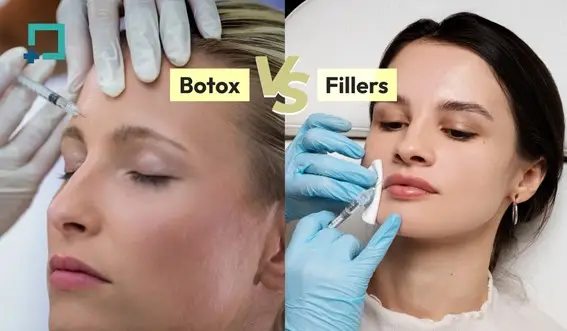
anti-wrinkle treatment relaxes muscles to soften expression lines. Fillers restore volume and structure.
Best for
anti-wrinkle treatment suits dynamic wrinkles. Fillers suit static lines, hollowing, and contour changes.
Results timeline
anti-wrinkle treatment results develop over days. Fillers are typically immediate, then settle.
How long results last
anti-wrinkle treatment often lasts around three to four months. Fillers may last from six to eighteen months depending on the area and product.
Reversibility
anti-wrinkle treatment wears off naturally. Many hyaluronic acid fillers can be dissolved if needed.
Can anti-wrinkle treatment and Fillers Be Used Together?
Yes. Many people benefit from a combined plan. anti-wrinkle treatment can soften movement lines while fillers restore volume and contour. This is sometimes referred to as a liquid facelift. The best approach depends on your facial anatomy and goals.
Which Is Better: anti-wrinkle treatment or Fillers?
There is no single answer. anti-wrinkle treatment is usually better for lines caused by movement. Fillers are usually better for volume loss and deeper folds. In many cases, a tailored combination achieves the most balanced outcome.
A consultation is the safest way to decide, especially if you have sensitive skin, previous filler, or complex facial concerns.
What to Expect at KONCEPT® Medical Clinic in Kingston, London
Step 1: Pre-treatment questionnaire
You will complete a medical questionnaire so we can understand your history, goals, and suitability.
Step 2: Doctor consultation
You will have a face-to-face consultation with a doctor. We assess facial anatomy and discuss realistic outcomes. Clinical photography may be used for assessment and tracking, with your consent.
Step 3: Informed planning
We explain your options, risks, aftercare, and what to expect. We also recommend time to consider your decision, so you feel fully informed.
Step 4: Treatment appointment
If you decide to proceed, the treatment is performed using fine needles and a precise technique. Most appointments take 30 to 60 minutes.
Step 5: Aftercare and review
Aftercare guidance is provided verbally and in writing. A review appointment may be arranged within two to four weeks, depending on the treatment.
Side Effects and Aftercare Tips
It is common to experience short term redness, swelling, tenderness, or mild bruising. These effects usually settle within days.
For the first 24 hours, it is often advised to:
- Avoid alcohol
- Avoid strenuous exercise
- Avoid touching or massaging treated areas
- Follow personalised aftercare instructions from your clinician
If you notice increasing pain, significant swelling, or unusual changes, contact the clinic promptly.
Why Choose KONCEPT® Medical Clinic?
At KONCEPT® Medical Clinic, we focus on natural looking results and safe clinical practice. Treatments are led by Dr Maryam and tailored to your facial anatomy. We also prioritise a calm, private setting and structured aftercare.
If you are based in Kingston upon Thames or nearby areas of London, our clinic offers a clinician-led approach to injectable treatments with careful assessment and planning.
A Final Word
When deciding between anti-wrinkle treatment vs fillers, understanding your concern is the first step. anti-wrinkle treatment reduces expression lines caused by movement. Fillers restore volume, shape, and support. Many people benefit from a combination, but the safest plan is always personalised.
If you are considering injectables in Kingston, London, a consultation helps you choose the right treatment with confidence.
FAQs
Which is better for wrinkles, anti-wrinkle treatment or fillers?
anti-wrinkle treatment is usually best for dynamic wrinkles, such as forehead lines and crow’s feet. Fillers are better for static wrinkles, folds, and volume loss. Many people benefit from both.
Is there downtime after injectables?
Most people return to normal activities the same day. Mild swelling or bruising can occur, especially with fillers.
How soon will I see results?
anti-wrinkle treatment usually starts to work within a few days and settles fully by around two weeks. Fillers are often immediate, then refine as swelling settles.
At what age should I start anti-wrinkle treatment or fillers?
There is no fixed age. anti-wrinkle treatment is sometimes used from the late twenties onwards for early expression lines. Fillers are more common when volume loss becomes noticeable. Suitability depends on your face rather than your age.
Can I return to work afterwards?
Yes, most clients do. However, you should follow aftercare advice and plan around any possible bruising.